
Our Computing Curriculum
Our Intent
At Delph Primary School, our ambition is for our children to be competent and confident in their use of technology in an increasingly digital world. We want our children to make responsible, safe, and creative choices. Our aim is for our children to become digitally literate and be able to participate fully in the digital world. Delph Primary School’s Computing Curriculum is structured around the key areas outlined in the 2014 National Curriculum and the Teach Computing Curriculum.
- Computer Science
- To develop an understanding of algorithms, programming, and computational thinking.
- To explore hardware and software, understanding their roles in technology.
- Information Technology:
- To teach children how to use various software applications to create, manage, edit, and share digital content.
- To develop and encourage skills in data handling and presentation.
- Digital Literacy:
- Promote responsible use of technology, focusing on online safety, digital citizenship, and ethics.
- To ensure that pupils can effectively evaluate online information and communication.
Implementation
Computing is primarily taught as a stand-alone subject, although cross-curricular links are made where appropriate with other subjects.
The importance of online safety is introduced early in each child’s school life and is reinforced regularly each year, building on pupil knowledge and understanding. As children gain understanding, more emphasis is placed on making responsible choices online, as well as evaluating information and keeping safe.
Children are given ample opportunity to learn Computing actively. Children learn coding skills, programming algorithms from Year 1 up to Year 6 using the Scratch Software. Children have access to a wide range of technologies including iPads, Chromebooks, VR headsets, and a greenscreen. Children are also given opportunities to develop real-life computing skills using the Chromebooks and iPads for word processing, data analysis, and internet research.
Impact
Children know practical ways of keeping themselves safe online. As they move through school, they also become more aware of how to make responsible choices in online activities as well as being able to think critically about online content.
Children become aware of the vocabulary associated with coding and are able to program and debug a variety of different algorithms.
Children use the internet to research other curriculum areas and can use technology to present their learning, such as using Book Creator, iMovie etc.
By the end of their time in school, children have built a range of computing skills linked to the Computing progression grid and are ready to build on these skills further.

Computing Progression Grid
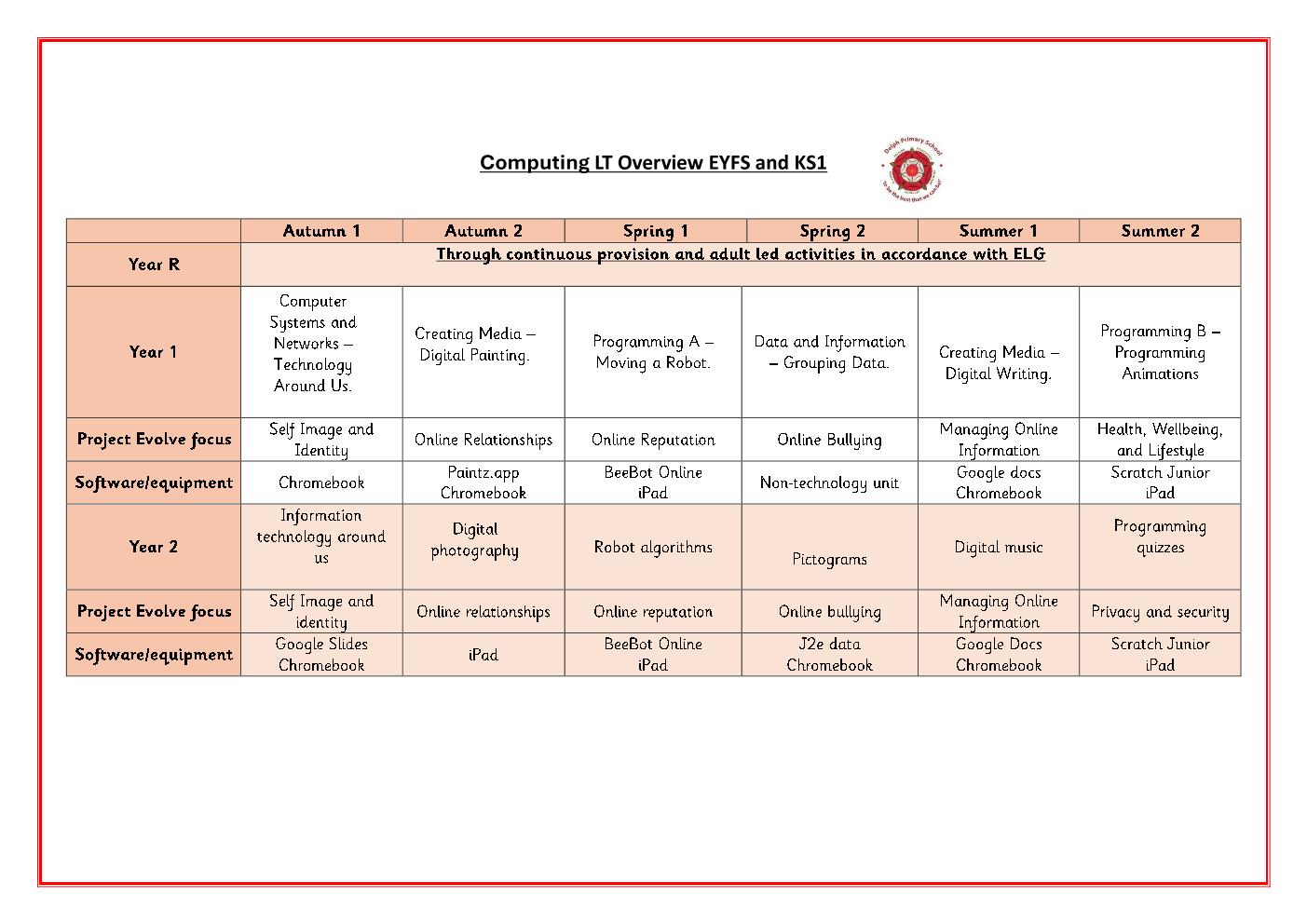
Computing Long Term Overview

Sticky Knowledge
Sticky knowledge is the interesting facts and knowledge children need to know in this subject.

Computing Learning Resources
Please use the links below to visit our Learning Zone.
 |
KS1 Computing Resources |
|
KS2 Computing Resources |